
The Ego’s Struggle with Letting Go
How to Change Your MindPollan’s journeys and the book’s neuroscience account trace how the self can protect daily life yet also narrow experience and reinforce suffering.
increasing Bearing strength in each event
 decreasing
Bearing strength in each eventdecreasingThe Ego as Daily Organizer

The Self at Work
A useful structure
The ego helps organize memory, plans, and social behavior. It supports the familiar identity from which Pollan approaches work, family, and the possibility of a trip.
A hidden cost
The same organizing force can defend against strong feeling and unfamiliar perspectives. Pollan worries that loosening it might expose him to madness or buried distress.
Resistance Before the Session

Fear Makes Its Case
Rational warnings
Pollan’s mind inventories danger: heart problems, loss of control, and the possibility of psychological collapse. The fear is not merely an obstacle but part of his decision-making.
A repeated threshold
Each time, the doubts intensify before the session and quiet after he commits. The pattern reveals how strongly the self resists surrendering its familiar authority.
Selfhood Comes Apart

The Ego’s Dissolution
A new vantage
Pollan experiences his familiar identity dispersing while an observing awareness remains. The event suggests that his usual self may not exhaust what consciousness can be.
Relief and uncertainty
He finds the state calm rather than annihilating, but does not know whether the awareness is universal or brain-generated. The experience challenges fear without proving a theory.
The Brain’s Network Model
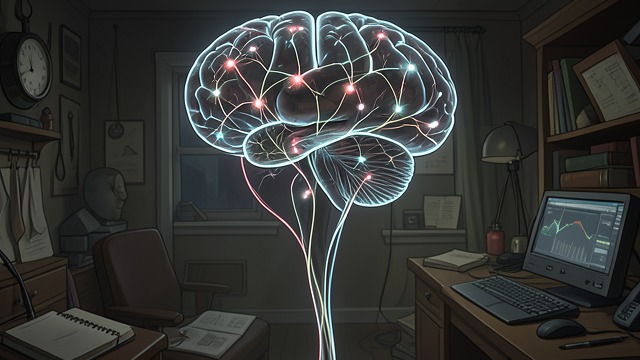
A Possible Mechanism
Network activity shifts
Studies connect reductions in default-mode activity with reports of ego dissolution. Researchers propose that normal self-modeling becomes less dominant during psychedelic states.
Correlation is not identity
The network model offers a productive account of some effects, but it cannot alone explain subjective experience. A neural description remains distinct from the felt event.
Learning Another Response
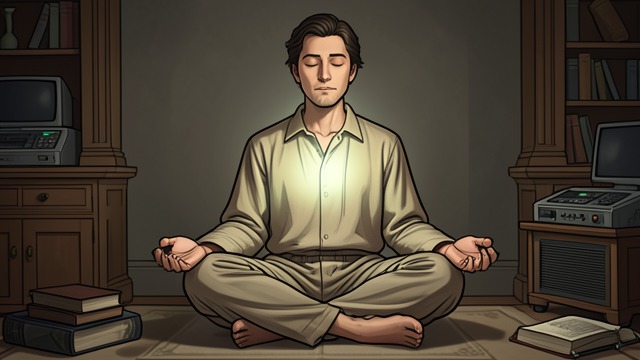
Practice Beyond the Trip
A remembered alternative
Pollan finds that meditation can sometimes recreate a less reactive mental stance. The experience has shown him that thoughts and feelings need not command the self.
A modest resolution
The ego returns, but its authority no longer seems absolute. The possibility of responding with greater openness becomes a practical legacy rather than a permanent state.
Before Pollan’s first guided journey
On the nights before the journeys
During the psilocybin journey
During the neuroscience chapter
After Pollan’s journeys
